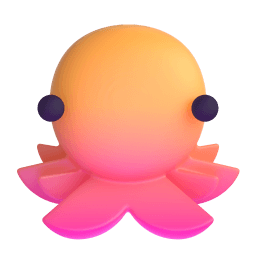
People ask us this a lot, usually right after they ask whether the shipping labels are really free (they are). When we were naming the company, we made a long list of sea creatures. Sharks felt aggressive. Whales felt slow. Crabs only go sideways, which is the wrong direction for a package. And then there was the octopus.
Eight arms, all busy
The obvious one first. Running an online shop means doing eight things at once: packing, printing, answering messages, restocking, photographing, posting, refunding and remembering to eat lunch. We want Octoship to feel like a spare set of arms for the shipping part, so you can use yours for everything else.
A brain that's spread out
An octopus has around 500 million neurons, and roughly two-thirds of them are in its arms, not its head. Each arm can taste, touch and make some decisions on its own while the central brain handles the big picture. That's more or less how we think about automation: rules that handle the routine stuff at the edges (pick the cheapest service, fill in the customs form, send the tracking email) while you stay in charge of the big decisions.
Three hearts
Octopuses have three hearts. Two pump blood through the gills and one pumps it to the rest of the body. We like to think we have three too: one for sellers, one for their customers, and one for the people at the carriers who actually move the boxes. (The octopus's main heart briefly stops beating when it swims, which is why they prefer crawling. We also prefer not to rush.)
Blue blood, no snobbery
Octopus blood is blue because it uses a copper-based protein called hemocyanin to carry oxygen instead of the iron-based hemoglobin we use. It's a great fit for cold, low-oxygen water. We mention this mainly because "blue-blooded" usually means fancy and exclusive, and the whole point of Octoship is the opposite: commercial shipping rates that used to belong to big companies, available to anyone, free.
Champion of small spaces
With no bones, an octopus can squeeze through any gap larger than its beak, the only hard part of its body. They're famous escape artists in aquariums. Getting things into the smallest possible box is pretty much the whole art of saving money on shipping, so honestly the octopus was overqualified.
- Eight arms: for doing many things at once
- Distributed brain: for automation at the edges
- Three hearts: for sellers, customers and carriers
- Blue blood: for great rates without the snobbery
- No bones: for fitting into the smallest box possible
“We also considered a narwhal. The pointy end was a packaging liability.”
So that's why. Clever, flexible, good with its hands (all of them), and just a little bit odd. We'd like to think the same is true of us.